
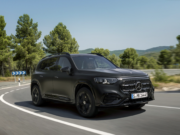










Few vehicles have shaped the premium SUV market quite like the BMW X5. Since its debut in 1999, the X5 has become one of the brand’s biggest global success stories, setting the benchmark for what BMW calls the Sports Activity Vehicle. Now, as the fifth-generation model makes its debut, BMW has completely reimagined the X5, introducing a bold new look, cutting-edge technology and an unprecedented choice of powertrains. Built around BMW’s latest Neue Klasse design philosophy, the new X5 is also the first BMW model engineered to accommodate five different propulsion technologies, underlining the company’s multi-path approach towards electrification.
For the first time, the X5 will be offered as a fully electric model, joining plug-in hybrid and diesel variants when it arrives in Ireland. In selected global markets, petrol models will also be available, while a hydrogen-powered version is scheduled to complete the line-up in the future. Leading the electric range is the all-new BMW iX5 60 xDrive. Powered by BMW’s sixth-generation eDrive technology, it produces 578hp and offers a claimed WLTP driving range of up to 845 kilometres, making it one of the longest-range electric SUVs currently announced. The impressive figures are made possible by a new 141kWh battery featuring taller cylindrical cells and BMW’s latest cell-to-pack battery architecture. Rapid charging capabilities have also taken a significant leap forward, with charging speeds of up to 460kW allowing drivers to spend less time plugged in and more time on the road. BMW has also confirmed that a high-performance electric M Performance variant will join the range at a later date.
Recognising that many buyers still want the flexibility of a combustion engine, BMW will continue to offer plug-in hybrid versions of the X5. The X5 50e xDrive and flagship X5 M60e xDrive both combine an updated turbocharged 3.0-litre straight-six petrol engine with an electric motor producing 197hp. Energy is supplied by a 26.5kWh battery, allowing up to 101 kilometres of electric-only driving. The headline act is undoubtedly the X5 M60e xDrive. With a combined output of 612hp and 800Nm of torque, it dispatches 0-100km/h in just 4.5 seconds, placing it firmly among the quickest SUVs in its class. Diesel remains part of the line-up too. The X5 40d xDrive pairs BMW’s latest 3.0-litre six-cylinder diesel engine with 48-volt mild hybrid assistance, producing 670Nm of torque while delivering impressive efficiency for long-distance drivers.
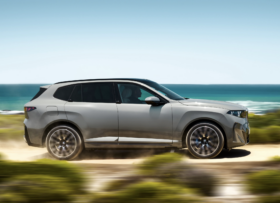
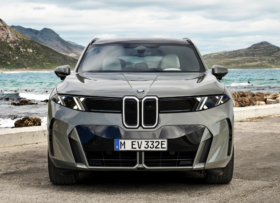
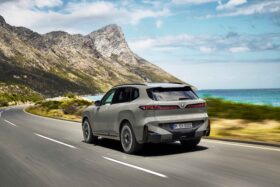
Perhaps the most interesting addition is one that won’t arrive immediately. BMW has confirmed that the production iX5 Hydrogen will complete the range, becoming the company’s first series-production hydrogen-powered model. Combining BMW’s third-generation fuel-cell technology with a compact high-voltage battery, the hydrogen variant is expected to deliver a driving range of up to 750 kilometres. Visually, the new X5 marks one of the biggest design evolutions in the model’s history. BMW has moved towards a cleaner, more minimalist appearance inspired by the forthcoming Neue Klasse models. The front end is dominated by a redesigned illuminated kidney grille, while new “double-X” daytime running lights create a distinctive signature that will become familiar across future BMWs. The SUV’s profile remains unmistakably X5, but smoother surfaces, a more aerodynamic roofline and flush detailing give it a more sophisticated appearance. Around the rear, slim full-width lighting and pronounced shoulders create a wider, more planted stance. Customers can choose from eleven exterior colours and alloy wheels measuring up to 23 inches, with M Sport, M Sport Pro and M Performance models adding progressively more aggressive styling.
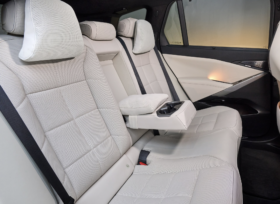
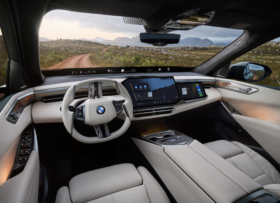
Inside, BMW has completely reinvented the X5’s cabin. The dashboard is cleaner than ever, with physical buttons reduced to a minimum and a strong emphasis placed on digital technology. The centrepiece is BMW’s latest Panoramic iDrive system, which combines a large central touchscreen with BMW Panoramic Vision and a new-generation 3D Head-Up Display. For the first time in an X5, buyers can also specify a dedicated passenger display, allowing front-seat occupants to interact with navigation, entertainment and vehicle functions independently. Premium materials feature throughout the cabin, including the option of natural slate trim, while ambient lighting wraps around the dashboard to create a modern lounge-like atmosphere. Standard equipment includes a panoramic glass roof and redesigned sports seats, while higher-specification models offer ventilated massage seats, four-zone climate control, rear seat heating and an 18-speaker Bowers & Wilkins audio system with Dolby Atmos. Rear passengers also benefit from an upgraded Travel & Comfort system, with optional magnetic mounts for tablets and smartphones.
As expected, the new X5 is packed with the latest driver assistance systems and connected technology. BMW’s newest software platform supports over-the-air updates, advanced driver assistance functions and enhanced digital services, while bidirectional charging on electric models allows owners to power external devices or even feed electricity back into the grid where infrastructure permits. Irish customers will initially be offered a choice of battery-electric, plug-in hybrid and diesel powertrains, ensuring the new X5 appeals to a broad range of buyers. Whether it’s the long-range iX5, the powerful M60e plug-in hybrid or the efficient 40d diesel, BMW is making it clear that there isn’t a one-size-fits-all solution to electrification. The fifth-generation BMW X5 represents far more than a simple model update. It previews the future direction of BMW’s SUV range, blending the latest Neue Klasse design language with advanced technology and a wider choice of powertrains than ever before. If first impressions are anything to go by, the X5 looks well placed to remain one of the premium SUV segment’s benchmark models for years to come.