
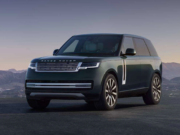





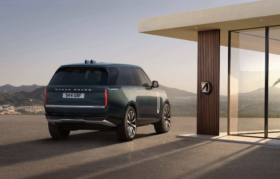
After more than five decades of Range Rover production, one of the world’s best-known luxury SUVs has finally gone fully electric. The new Range Rover Electric made its Irish debut last week at Spirit Jaguar Land Rover in Sandyford, giving us our first opportunity to see the new model up close ahead of the first customer cars arriving in Ireland. This was an unveiling rather than a driving event, so we’ll have to wait a little longer before discovering how the first electric Range Rover performs on Irish roads. First impressions, however, are impressive. Crucially, Range Rover hasn’t tried to make its first EV look radically different simply for the sake of it. It remains unmistakably a Range Rover, retaining the imposing proportions and restrained design that have become synonymous with the model.
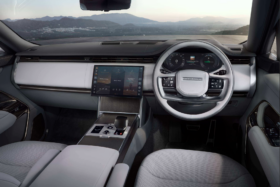
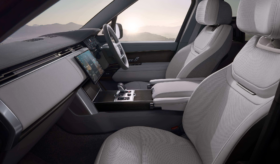
Electric propulsion also seems particularly well suited to a Range Rover. These are exceptionally quiet and refined vehicles even with a combustion engine, so the prospect of near-silent electric propulsion should take that sense of isolation another step further. Range Rover describes it as its quietest model yet, with additional drivetrain isolation, acoustic laminated glass and Active Noise Cancellation helping create an even calmer cabin. Underneath is a substantial 118.5kWh usable battery combined with an 800-volt electrical architecture. Twin electric motors provide all-wheel drive, with the most powerful versions producing up to 550PS and 850Nm of torque. Despite the Range Rover’s considerable size, 0-100km/h can take as little as 4.5 seconds.
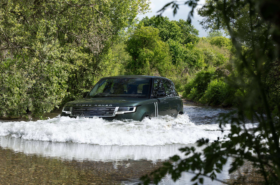
More relevant to most owners will be range and charging. Range Rover quotes a WLTP figure of up to 600km, alongside an estimated real-world range of up to 535km. Connected to a suitably powerful 350kW DC charger, the battery can be replenished from 10 to 80 per cent in around 22 minutes, while a ten-minute stop can add up to 220km of range. Importantly, going electric hasn’t meant abandoning the capability traditionally associated with the Range Rover name. The Electric can wade through up to 900mm of water and tow as much as 2,500kg. New electronic traction systems can respond far more quickly than their combustion-engined equivalents, while single-pedal control has even been integrated with the Terrain Response system for off-road driving.
Range Rover has certainly tested those claims. Development covered more than 1.5 million kilometres, ranging from temperatures of -40°C in Sweden to extreme heat in Dubai, along with the familiar testing grounds around Eastnor Castle in the UK. More than 300 patent applications have been filed around the new model, the most associated with a single vehicle in Range Rover’s history. Production takes place alongside other Range Rover models at Solihull, the home of Range Rover manufacturing since 1970. Buyers can choose short- or long-wheelbase versions, with SE, HSE and Autobiography specifications joined by SV, SV Black, SV Ultra and a First Edition.
Irish pricing starts from €160,620, with the most expensive versions stretching beyond €325,000, so this remains very much a luxury proposition. Irish order books are now open. For now, we’ve only seen it rather than driven it, but the initial ingredients look convincing. A Range Rover has always been about travelling with as little noise, effort and drama as possible, which arguably makes it one of the most natural candidates for electrification. With up to 600km of range and genuinely rapid charging added to the familiar luxury and capability, the Range Rover Electric looks impressive on paper and in the metal. The real test will come when we finally get behind the wheel!