

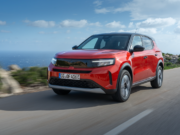

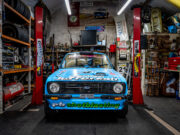
Croatia provided a fitting backdrop for the first drive of the new Astra and Astra Sports Tourer, with both models set to arrive in Ireland just ahead of the 262 registration period. Before getting behind the wheel, Opel took us on a journey through the model’s history, showcasing generations of Kadett and Astra models. It was a nice touch, especially for those of us who’ve owned a few along the way, and a reminder of just how much this car has evolved. Although only a mid-life refresh the sense of progression feels more apparent than ever in this latest Mk8 Astra.
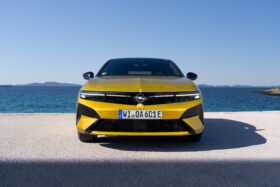
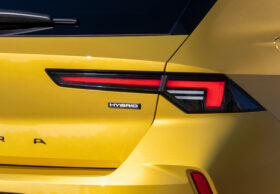
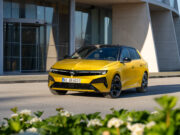
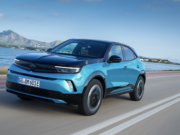
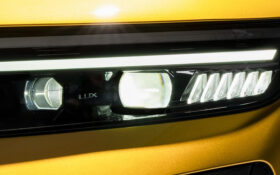
The design has been further sharpened with Opel’s signature Vizor front end now illuminated for the first time. It gives the car a more premium and distinctive look, helping it stand out in what is a fiercely competitive segment! Flanked each side of the blitz emblem is Opel’s optional new Intelli-Lux HD lighting system offering incredible visibility to light up dreary Irish roads of a winters morning. Buyers won’t be short on choice either, with petrol hybrid, plug-in hybrid, fully electric and diesel options all available.
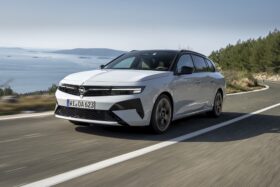
Our first drive took us high into the Dinaric Alps, where smooth, sweeping roads and dramatic views of the Adriatic created an ideal setting to get a proper feel for the car. We started in the all-electric Astra Sports Tourer, equipped with a 58kWh battery. Opel quotes a range of up to 454 kilometres, though with a route like this, real-world figures were always going to take a bit of a hit! These were some of the most demanding but best driving roads I’ve ever experienced, not exactly your average commute! Through the twisty, billiard-table-smooth roads, the electric Astra felt composed and easy to drive, with smooth power delivery that suits both relaxed cruising and more spirited sections in Sport mode. Braking was strong, although the near 1,700kg weight does make itself known through tighter corners when pushing on. That said, the suspension soaked up what few road imperfections there were with ease.
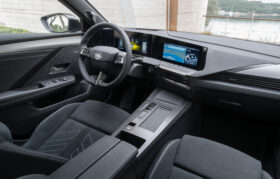
Inside, the cabin has taken a small but noticeable step forward. The digital displays are clearer and more intuitive, with updated graphics that give the interior a more modern feel. Buttons are still present and everything is laid out logically too, so it doesn’t take long to get comfortable. Speaking of comfort, Opel’s AGR Intelli-Seats come as standard and proved impressive over the two hour stint we had behind the wheel on day one. Opel also highlighted a clear effort to use more sustainable materials throughout, including vegan finishes and recycled fabrics, which adds to the overall sense of quality. For us it’s getting harder to tell what is real leather or not these days!
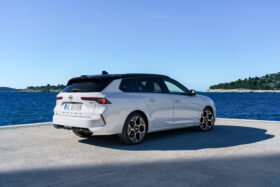
Trim levels are expected to mirror the current Opel line-up, with a choice of Griffin, GS and Ultimate models, offering a clear step up from the adequately equipped entry-level through to a more premium, tech-focused range-topper. Practicality also continues to be one of the Astra’s strong suits. The hatchback offers generous boot space, while the Sports Tourer provides even more versatility, depending on your choice of powertrain. The hatchback delivers 422 litres in the 48V hybrid, dropping to 352 litres in the electric version and 310 litres in the plug-in hybrid making the PHEV the weakest link for outright space. If practicality is a priority, the Sports Tourer is the one to go for, with capacity increasing to between 597 litres in the hybrid and 466 litres in the electric.
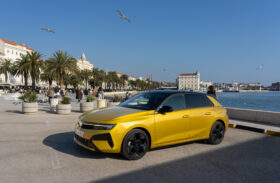
Day two gave us the chance to sample the hybrid range on a slightly different test route. The 48-volt mild hybrid uses a 1.2-litre petrol engine paired with electric assistance, delivering smooth and efficient performance that feels well suited to everyday driving. For those looking for a bit more flexibility, the plug-in hybrid adds the option of short-distance electric running (84km), making it an appealing choice for the school run without fully committing to electric. For higher mileage drivers, Opel is continuing to offer a 1.5 litre turbo diesel, producing around 130hp and 300Nm, which will still make the most sense for those regularly covering longer distances!
Overall, the new Astra remains a decent evolution of the familiar name that we would like to see more of on Irish roads. Sadly the once-dominant family hatchback segment has fallen victim to changing tastes! Where cars like this were once, all most drivers needed, today the pull of the small SUV is hard to ignore. It builds on the strengths that have made it a popular choice in Ireland for decades, while introducing enough new technology and refinement to keep it relevant against the Peugeot 308 or VW Golf. With a broad range of powertrains and improved comfort throughout, it should appeal to a wide range of buyers when it arrives in Irish dealerships in mid-2026. Pricing has yet to be finalised, but there’s a sense that a revised pricing strategy could make both the plug-in hybrid and fully electric versions particularly strong value for Irish punters!