
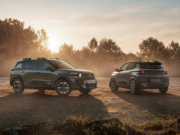
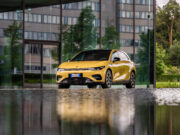

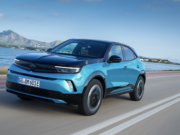
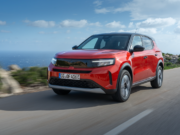
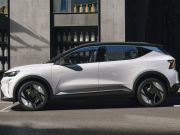
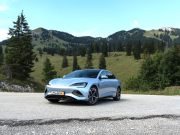


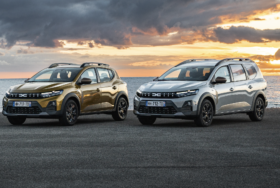
This week, Dacia chose the picturesque landscape of the south of France to showcase the latest upgrades to its model range for 2026, using the roads and rugged trails high above Nice to demonstrate how its refreshed line-up performs in real-world conditions. During the press event, the brand highlighted new powertrains, updated technology and revised design elements across Jogger, Sandero, Sandero Stepway, Duster and Bigster, reinforcing Dacia’s focus on practicality, efficiency and everyday value. A major highlight for the Irish market is the arrival of the updated Hybrid 140 powertrain in the Jogger. This proven full hybrid system combines a 1.6-litre four-cylinder petrol engine with two electric motors and a high-voltage starter generator, powered by a compact traction battery and paired with a sophisticated hybrid automatic gearbox. The transmission seamlessly blends petrol and electric power, delivering smooth transitions and a more refined driving experience in daily use.
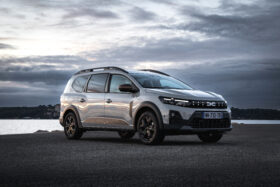
On the road, the new Jogger Hybrid feels notably more potent, particularly when pulling away from junctions or accelerating at speed. With a combined output of 140 horsepower, it delivers decent real-world performance while maintaining impressive efficiency. In urban driving conditions, Jogger can operate in all-electric mode for up to 80 percent of the time, significantly reducing fuel consumption and emissions. The system also ensures the vehicle always starts in electric mode, contributing to a quieter and more relaxed driving experience. For the Irish market, the absence of the LPG system allows space for a full-size spare wheel, adding an extra layer of practicality for longer journeys and rural driving, something many Irish buyers will appreciate.
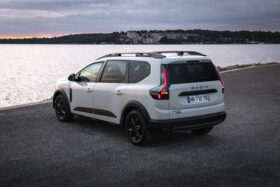
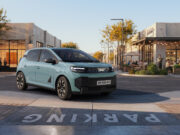
Across the Sandero, Sandero Stepway and Jogger ranges, Dacia continues to develop its petrol and flex-fuel offerings for markets where LPG remains relevant. A new 1.2-litre three-cylinder turbocharged engine producing 120 horsepower is now available, paired for the first time with a smooth six-speed dual-clutch automatic transmission. Customers can also opt for a six-speed manual gearbox, whilst the steering wheel-mounted paddles our test car had offered a welcome addition and represent a first for the brand! Design updates also play a significant role in the latest evolution of the Dacia range. Sandero, Sandero Stepway and Jogger are the first models to adopt the brand’s new LED lighting signature, featuring an inverted T-shaped graphic integrated into the headlamps. This distinctive element reinforces the vehicles’ rugged stance while clearly identifying them as Dacia models. At the rear, new LED pixel lights extend the visual line of the tailgate window, with vertical shapes that follow the contours of the bodywork to create a cleaner and more modern appearance.
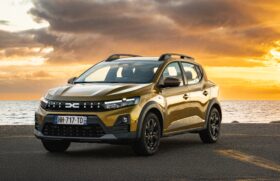
Sandero Stepway receives additional exterior enhancements that underline its character, including a new grooved matt black strip connecting the rear lights and a redesigned bumper. On the road, the updated Stepway feels far more grown up than when it first arrived on the Irish market. It remains refreshingly honest in its approach, but now combines improved refinement with confident styling that gives it genuine presence. Where it may once have been seen as a budget crossover, it now has real appeal and composure on the road. Both Sandero Stepway and Jogger benefit from the introduction of Starkle protective elements on the wheel arches, lower body sections and fog lamp surrounds. Developed by Dacia engineers and first seen on the new Duster, Starkle contains 20 percent recycled plastic. Left untreated and unpainted, it reduces environmental impact during production while offering greater resistance to everyday scratches.
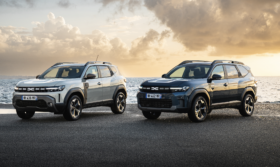
Turning to Duster and Bigster, Dacia has enhanced the powertrain line-up with the introduction of the new Hybrid 150 4×4 system, available on both models. This advanced setup combines a 1.2-litre 48V mild-hybrid petrol engine producing 140 horsepower at the front with a rear-mounted electric motor delivering up to 31 horsepower, resulting in a combined output of 154 horsepower. The combustion engine generates 230 Nm of torque, while the electric motor contributes up to 87 Nm to the rear axle. The petrol engine is paired with a six-speed dual-clutch automatic transmission featuring steering wheel-mounted paddles, while the electric motor integrates with a two-speed gearbox and a disengageable rear axle.
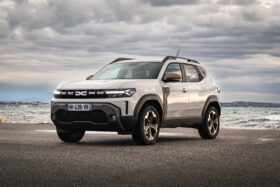
The innovative two-speed transmission for the rear electric motor is central to the system’s effectiveness. First gear delivers high torque at low speeds for enhanced traction and off-road capability, while second gear reduces electric motor speed at higher velocities, maintaining strong rear grip at speeds of up to 140 km per hour. A neutral mode allows the rear axle to disengage when four-wheel drive is not required, reducing friction losses and improving efficiency in two-wheel drive operation. With the 48V lithium-ion battery recharging while driving, the system can operate in electric mode for a significant portion of urban journeys. Official fuel consumption is rated at 5.9 litres per 100 kilometres, with CO2 emissions between 133 and 134 grams per kilometre.
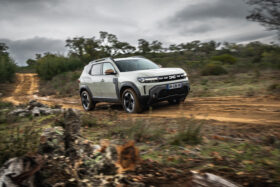
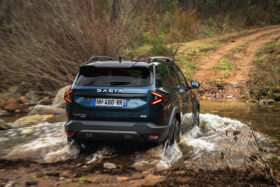
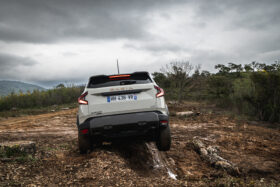
High above sea level overlooking Nice, Dacia provided an extended off-road driving experience in both Duster and Bigster, lasting nearly 30 minutes across rugged terrain. Recent wet weather not too dissimilar from Ireland added to the challenge, with rocky tracks, river crossings, steep climbs and technical descents allowing us to fully explore the capabilities of the new four-wheel-drive system. Switching between Auto, Mud and Lock modes highlighted the system’s versatility. Auto mode continuously balances torque between the axles for efficiency and grip, Mud mode sharpens traction responses for loose surfaces, while Lock mode maintains a fixed torque split for more demanding off-road sections. Hill Descent Control provided reassuring stability on steep declines, allowing the driver to focus solely on steering. Both vehicles were fitted with Continental all-season tyres, which offered impressive grip throughout. Duster and Bigster maintained composure and traction across challenging surfaces while still feeling controlled and predictable, proving they are genuinely capable off-road rather than simply rugged in appearance.
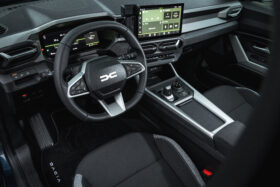
Inside the cabin, Dacia has introduced a number of new comfort, safety and connectivity features depending on trim level. Customers can now opt for automatic headlamps, a multi-view camera system and power-folding door mirrors. A new multimedia system with a 10-inch central touchscreen brings connected navigation and wireless smartphone charging, while the 7-inch digital instrument cluster features a revised interface for improved clarity. Safety is further enhanced with the introduction of new driver assistance systems meeting the latest European standards, including automatic emergency braking with expanded detection capability and the configurable driver attention alert system!
Dacia continues to offer a three-year, 100,000 kilometre warranty as standard, with options available for customers who wish to extend their cover further. Irish pricing remains one of the brand’s strongest selling points, with the Sandero range starting from at just €18,890, Sandero Stepway from €20,690, Jogger from €26,990 range, Duster from €25,990 and the larger Bigster kicking off from €29,990. Across the line-up, buyers can typically choose from Essential, Expression and Journey trim levels, depending on model, allowing customers to tailor specification to suit their needs and budget. Final Irish pricing and specifications for the exact versions tested during the south of France drive programme will be confirmed in the coming weeks. With these updates, Dacia reinforces its commitment to build affordable practical cars now blending electrification, robust design and genuine usability across the range. We look forward to bringing you detailed reviews on each model as they arrive on Irish shores.